The strength is in your team.
We put it to work.
We start with your business goal, work with the people who need to deliver it and bring their knowledge, expectations and resources into the process. The team builds the understanding and the plan together.
Individual perspectives first. Shared picture second.
Not a rigid programme. The scope and pace are shaped by your context.
- 01
Agree the vision and a concrete goal
With the sponsor, we agree the business vision and a concrete goal for the work. This sets the focus before anyone is asked for their perspective.
- 02
Hear individual perspectives
We explore how individual employees experience how work happens. No fixed labels are assigned. Any confidentiality or reporting arrangement is agreed in advance.
- 03
Bring patterns into team dialogue
Themes from individual perspectives are brought into facilitated team dialogue. The team sees the patterns together and decides what to discuss.
- 04
Examine how the organisation connects
We look at the connections between vision and strategy, innovation, production and service delivery, knowledge and resources, cross team flow, and execution.
- 05
Agree priorities, owners and review dates
The team agrees two or three priorities with named owners, practical next steps and suitable review dates.
A shared picture of how the organisation works. Key themes. Two or three agreed priorities. Practical actions with responsibilities.
Any individual input, confidentiality or reporting arrangement is agreed in advance.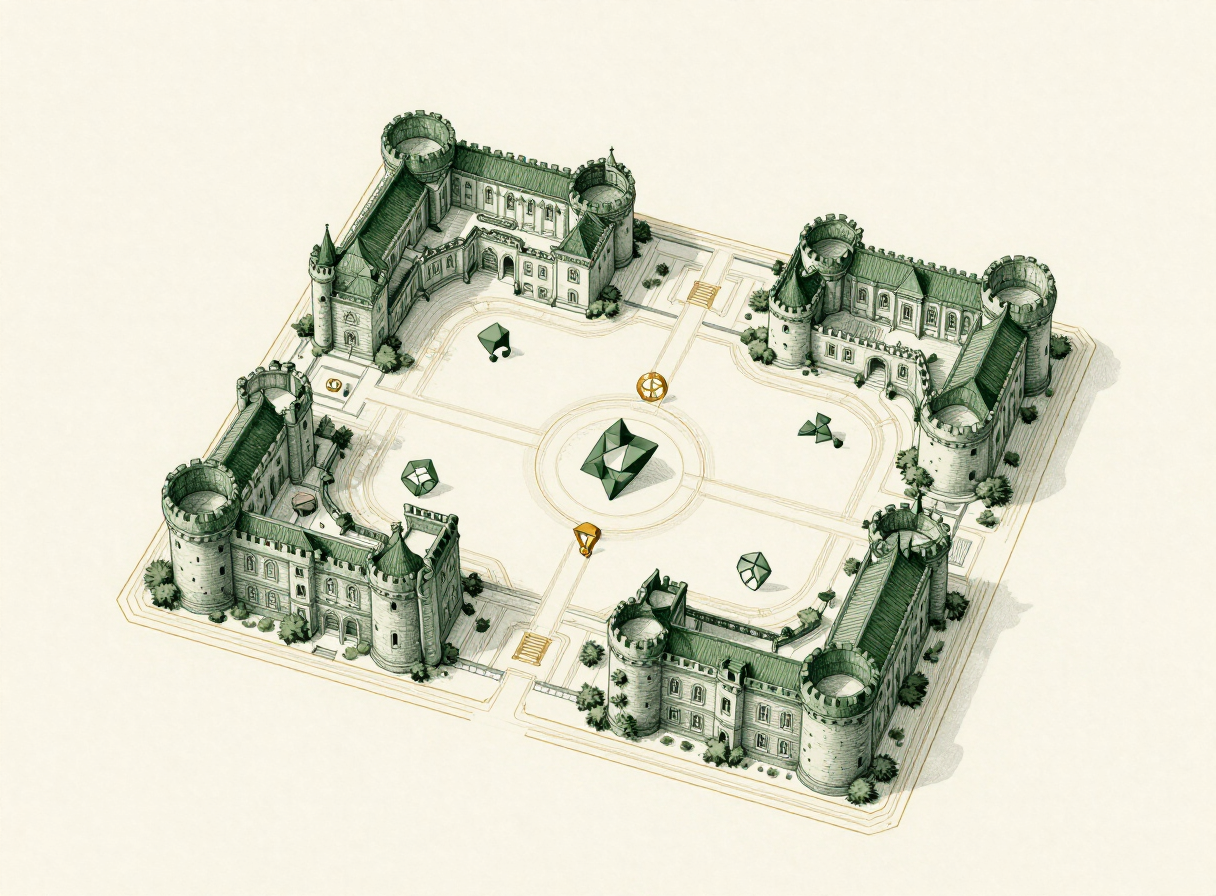
The Castle Method, used as a tool.
During a workshop we may use an experiential approach, sometimes called the Castle Method, to help participants place their work, resources and connections in relation to a shared picture. It is one tool within our wider Gestalt informed organisational work, not the concept itself.
It supports the process above. It does not replace it. The business value and deliverables come first.
Read more about the toolThe Gestalt foundation behind our facilitation
Gestalt organisational development.
Our work is grounded in Gestalt organisational development. We start with individual experience, look at interaction in the context of the whole organisation, bring assumptions into the open, test different ways of relating and agree action.
The sequence moves from person to team, to the organisation as a whole, and then to agreed priorities and actions. The Castle Method is one experiential tool within this approach, not the concept itself.
Two qualities shape how we work. Awareness means noticing the actual assumptions, reactions and interaction taking place right now, rather than reaching for an explanation too quickly. Embodiment means participants can use physical positioning, movement and attention to bodily experience to explore how they experience roles, distance, pressure and connection, alongside the dialogue. We do not read a posture as proof or diagnose people.
Read the researchExplore how the organisation connects
How the organisation connects.
We look at the connections between these areas to see where work flows and where it gets stuck.
Where the organisation is heading
How new ideas enter and develop
How value is created and delivered
What the organisation draws on
How work moves between people and teams
How priorities turn into action
A working diagram is built with your team while we work together. The connections shown here are illustrative starting points.
Read the supporting research
Why this approach makes sense.
Independent reviews support the underlying practices of teamwork training and structured reflection. They do not prove outcomes for a specific workshop.
Teamwork training
A review of 51 controlled studies with 8,439 participants found positive effects of teamwork training. Active learning and workshops support how teams work together.
Read the reviewLines et al.Structured team reflection
A review of 24 trials and experiments with 4,339 participants found positive average effects of structured team reflection, varying with measurement and context.
Read the reviewThese reviews support the underlying practices, not proof of this specific workshop or guaranteed outcomes.
Read the full researchLanguage and participation
Workshops are facilitated in English. For multilingual teams, extra language support or a second facilitator can be arranged so participants can express their views more clearly.
Support in Arabic, Urdu, German, Spanish and French can be explored, subject to availability. Other languages may be possible through local partners.
We agree language needs, facilitator roles and workshop format with you before we work together. Any extra fees are agreed in the proposal.
Discuss your language needsYour workshop material stays with you.
Your workshop material stays with you. We work under a confidentiality agreement. The material created during the workshop remains with your organisation. We keep only our own handwritten facilitator notes.
A workshop, agreed reporting, optional further support.
Scope, duration, participant numbers and any reporting arrangement are agreed in a tailored proposal.
What does your team need
to move forward?
Let’s talk about the challenges you face and the goals you want to achieve.